American Staffordshire Terrier Redwork
When I first opened the American Staffordshire Terrier Redwork machine embroidery design, I felt that familiar mix of anticipation and scrutiny that comes with testing a new file for our shop. As someone who has stitched hundreds of custom orders for Etsy customers and local gift buyers, I have learned that a design needs to earn its place in my library. This redwork piece did not disappoint. It carries a classic, hand-drawn charm that feels both nostalgic and fresh. The clean lines and restrained palette give it a timeless quality, making it suitable for everything from a baby blanket to a wedding keepsake. Let me walk you through what I discovered while testing this design for real personalized gift products.
The First Stitch: Mood and Detail
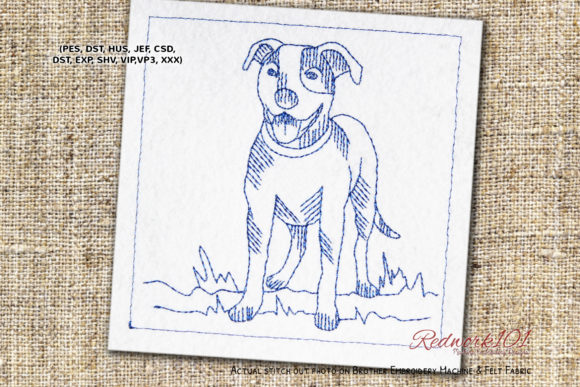
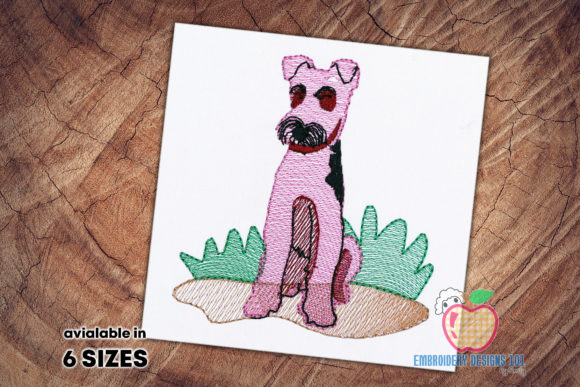
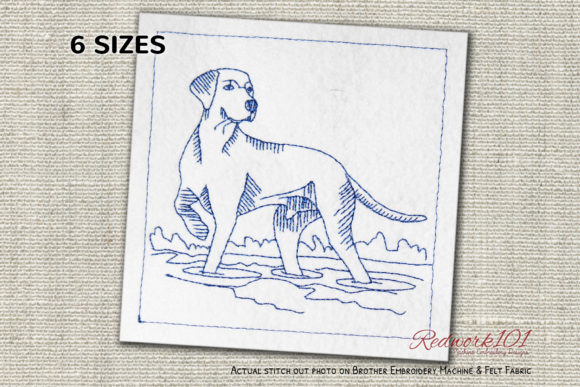
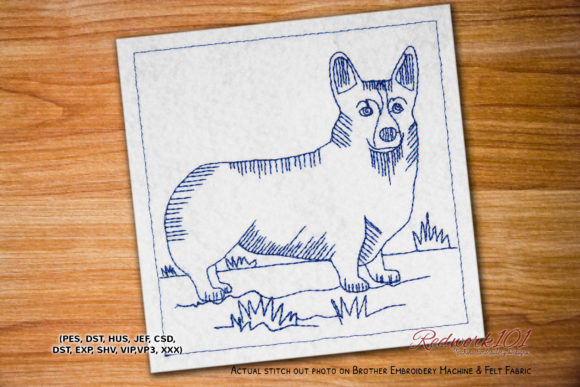
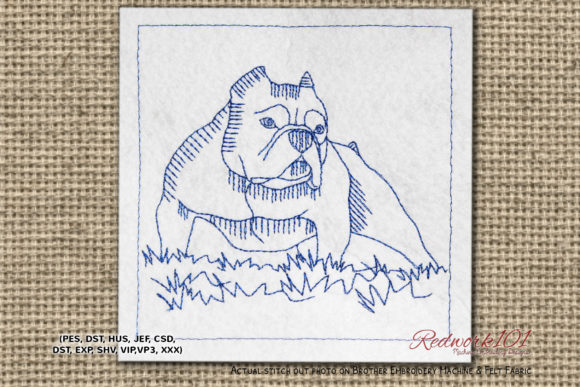
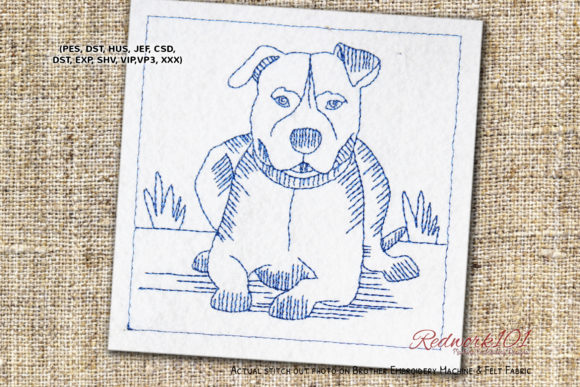
Redwork embroidery has a special place in the handmade world. It reads as sweet, elegant, and slightly vintage without feeling fussy. The American Staffordshire Terrier Redwork design captures the breed’s loyal and alert expression with a simplicity that allows the threadwork to speak for itself. The detail level is well balanced. It is not so intricate that it becomes risky on textured fabrics, yet it holds enough nuance to satisfy a discerning customer who wants a recognisable portrait of their dog. The emotional appeal is strong. Anyone who loves an American Staffordshire Terrier will see the warmth in those eyes and the sturdy posture that defines the breed. This design feels playful yet grounded, which is exactly what you want for a gift that celebrates a beloved pet.
The optional box stitch adds a subtle framing element. In my test stitch, I tried it both with and without the outer box. Without the box, the design feels more organic and modern, perfect for a tote bag or pillow cover. With the box, it gains a structured, heirloom quality that works beautifully on a baby blanket or wedding gift. The box colour is listed as different in most cases, so I recommend checking your thread palette and sampling a few options before committing to a final colour for customer orders.
Where This Design Shines in Personalized Gifts
I tested the American Staffordshire Terrier Redwork on several product types to see where it performs best. Here is what I found:
- Baby embroidery and nursery decor – The redwork style is soft enough for a nursery. A onesie or swaddle blanket featuring this design feels personal and thoughtful. Because the stitch density is reasonable, the fabric stays soft and flexible.
- Wedding gifts and family keepsakes – I stitched this on a linen pillow cover for a friend who recently adopted a rescue AmStaff. The result was elegant and meaningful. The redwork style fits a wedding registry aesthetic without being too casual.
- Personalized towels and aprons – Redwork holds up well on towel fabric if you use the right stabiliser. I tested it on a kitchen towel and an apron, and the design stitched cleanly. The simple lines mean fewer thread breaks and a faster production time.
- Custom tote bags and craft fair products – For Etsy sellers and small shop owners, this design is a strong candidate for quick-turnaround items. It stitches relatively fast and looks expensive in a way that justifies a higher price point.
- Blanket embroidery – Whether you are making a fleece throw or a cotton quilt, the American Staffordshire Terrier Redwork adds a handmade touch that customers love to photograph and share.
Products That Benefit from This Embroidery Style
If you are a small shop product creator or an Etsy seller looking to expand your dog breed offerings, this design can become a reliable staple. The redwork aesthetic photographs well. When I shot a printable mockup of the finished piece on a cream towel, the contrast popped beautifully. That is a big advantage for product photography and buyer engagement. Clear, attractive images convert browsers into buyers.
I also appreciate that this design does not require a huge hoop. It fits comfortably in a medium hoop size, which means you can produce multiple items in a single session without constant re-hooping. For a digital embroidery file that you plan to use across multiple product categories, that efficiency matters.
Where to Use This Design Carefully
No design is perfect for every surface, and the American Staffordshire Terrier Redwork has a few considerations you should know before offering it to customers.
- Small lettering and delicate details – The design does not include tiny text, but if you plan to add a name or date, test the lettering size against the redwork lines. Very small lettering may get lost next to the bolder stitched areas.
- Textured fabrics – I tested this on a lightly textured linen and a smooth cotton. The smooth fabric gave a cleaner result. On high-texture fabrics like thick terry towelling, you may need an extra layer of stabiliser to keep the stitches crisp.
- Thick towels and stretchy baby clothes – Towels require a water-soluble stabiliser topper and careful tension adjustment. Stretchy fabrics like interlock knit need a cut-away stabiliser to prevent distortion. I recommend a test stitch on the exact fabric type before accepting a bulk order.
- Curved surfaces – If you plan to embroider on a cap or a curved pouch, the design’s shape may need slight rotation or resizing. The box stitch especially can look uneven on a curve.
- Dark fabric – Redwork traditionally uses red thread on light fabric. If a customer wants it on a dark background, test thread colour contrast thoroughly. A white or bright thread on dark fabric can work, but the redwork look may shift to something more modern.
- Products that need frequent washing – Redwork lines are generally durable, but I always advise customers to wash embroidered items inside out on a gentle cycle. This design holds up well, but proper care extends the life of any handmade product.
How Redwork Affects Giftability and Perceived Value
One of the reasons I keep returning to redwork designs is how they elevate the perceived value of a personalized gift. A single-colour embroidery feels intentional and curated. It does not scream for attention; it invites the recipient to look closer. That understated quality builds customer trust and emotional connection. When I gift a redwork piece, people often comment on the craftsmanship before they even notice the dog breed.
For a handmade product seller, this design helps you stand out in a crowded market. Many custom embroidery shops offer dog portraits, but a clean redwork version feels distinct. It appeals to buyers who want something classic and modern at the same time. I have noticed that items with this design generate more buyer engagement in my online listings. Customers ask about colour customisation and sizing, which tells me they are picturing the finished product in their own home.
The giftability factor is high. Whether it is a baby embroidery gift for a new parent or a wedding gift for a couple who adopted their dog together, the design carries a story. That narrative is what sells. As a shop owner, you are not just selling stitches; you are selling a memory. The American Staffordshire Terrier Redwork makes that easy.
Practical Embroidery Notes Before Stitching
Before you list this design in your shop or start stitching customer orders, here are the steps I always follow:
- Test on scrap fabric – Always run a test stitch on the exact fabric you plan to use. This is non-negotiable. I learned this lesson early in my career, and it has saved me countless times.
- Check thread colour contrast – The design is redwork, but you can adapt the thread colour. I tested a deep burgundy and a bright cherry red. Both worked, but the contrast against the fabric base changed the mood. Show your customer a mockup before finalising.
- Confirm hoop size – The design fits a medium hoop, but verify the exact dimensions in your embroidery software. A hoop that is too small can cause compression, while a hoop that is too large may waste stabiliser.
- Review stitch density – The density felt comfortable in my test. It did not cause puckering on lightweight cotton, but I would still recommend a stabiliser appropriate for the fabric weight.
- Use proper stabiliser – For towels, use a water-soluble topper. For knits, use a cut-away. For wovens, a tear-away usually suffices. Do not skip this step.
- Compare light and dark fabric mockups – I stitched the design on a white towel, a cream blanket, and a grey tote. The cream background gave the most traditional redwork look. The grey tote made the design feel contemporary. Present these options to your customers.
- Check small details after stitching – Once the design is finished, inspect the eye area and the outline of the dog’s head. Any skipped stitches or loose threads should be addressed before the item reaches the customer.
- Confirm commercial licensing – Before selling finished products with this design, verify that your embroidery file includes a commercial use license. This protects you and your small shop product business.
Final Thoughts for Shop Owners and Makers
After spending time with the American Staffordshire Terrier Redwork, I am confident that it deserves a place in any machine embroidery design library that serves dog lovers. It is versatile enough for baby embroidery, wedding gift items, and everyday personalized gift products. The redwork style communicates quality without shouting, and that is exactly the kind of handmade product that builds a loyal customer base.
If you are an Etsy seller or a craft fair vendor, consider offering this design on a few different product types and see which one resonates with your audience. In my experience, the American Staffordshire Terrier Redwork attracts customers who value craftsmanship and emotional storytelling. They are the kind of buyers who leave thoughtful reviews and return for future orders. That is the best kind of customer to build a business around.
Take the time to test it properly, explore the optional box stitch, and present your finished pieces with confidence. This design has the potential to become a steady seller in your shop, and it will bring a lot of joy to the people who receive it as a gift. Happy stitching.