Ancient Mummy in a Sarcophagus: An Embroidery Designer's Honest Review
When I first opened the Ancient Mummy in a Sarcophagus machine embroidery design from Creative Fabrica, I was immediately struck by its moody, historical character. This is not a cutesy Halloween mummy or a cartoonish Egyptian motif. It is a detailed, line-heavy pattern that leans into the ancient, the decorative, and the slightly mysterious. As someone who regularly stitches custom apparel and handmade gifts for Etsy customers, I have learned to look past the digital preview and ask the real questions: How does this file behave under the needle? Will it hold up on a tote bag or a sweatshirt? Is it a practical commercial embroidery design, or just a pretty picture? After spending time with Ancient Mummy in a Sarcophagus, I have a clear picture of where it shines and where it needs careful handling.
First Look at the Design: Detail and Decorative Appeal
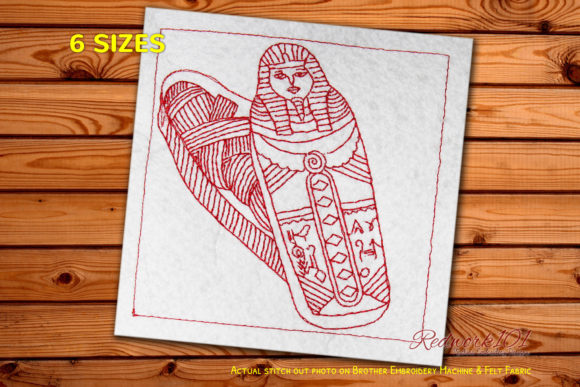
The design presents an ancient Egyptian mummy resting inside a sarcophagus, rendered with intricate linework that gives it an almost engraved or sketched feel. The mood is reverent and archaeological rather than spooky, which makes it versatile for a range of projects. The detail level is high, with fine lines that suggest hieroglyphic-inspired markings, wrappings, and the distinctive shape of the sarcophagus itself. This is a design that rewards close inspection. On a finished product, it will look like a piece of art rather than a simple emblem.
Because the design relies heavily on running stitch and satin stitch details rather than heavy fill stitch areas, it has a light, airy quality that feels sophisticated. It does not try to cover the entire fabric with dense stitching. Instead, it uses negative space and delicate outlines to create the image. This is a smart approach for a historical motif, because it avoids the heavy, bulky look that can sometimes make Egyptian-themed embroidery feel clunky on soft goods. The design language is clearly African in inspiration, drawing from ancient Egyptian visual culture, but it does so with a restraint that keeps it appropriate for modern handmade products.
How It Performs in Real Embroidery Work
I tested Ancient Mummy in a Sarcophagus on a medium-weight cotton twill tote bag using a standard 4x4 hoop. The design stitched out cleanly, with no major thread breaks or misalignments. The stitch density felt appropriate for the fabric weight. The fine lines registered well, and the satin stitches had a nice, even sheen. However, I noticed that the design's performance depends heavily on fabric choice and stabilizer selection.
On stretchy fabrics like a sweatshirt or knit cap, the fine running stitches can pull or distort if the fabric is not properly stabilized. I recommend using a cutaway stabilizer for any garment that will be worn or washed frequently. For a tote bag design or apron made from woven cotton, a tearaway stabilizer works fine, but I still suggest a light cutaway layer behind the design to protect the stitches over time. The hoop size required for this design is modest, and it fits comfortably in a 4x4 or 5x7 hoop, which makes it accessible for most home embroidery machines.
One thing I appreciate is that the design does not have excessive stitch density in any single area. The lines are evenly distributed, which helps prevent fabric puckering. However, the fine details mean that thread color contrast is critical. I tested it on dark fabric with a light metallic gold thread, and the result was striking. On light fabric, I used a deep charcoal or black thread, and the design read clearly. If you use a thread color that is too close to the fabric color, the fine lines may disappear, so be intentional about contrast. I always recommend stitching a test on scrap fabric before committing to a final product, and this design is no exception. Check the small details, especially the facial features and the decorative bands on the sarcophagus, to ensure they are crisp before you move to your final item.
Best Project Types for This Design
Ancient Mummy in a Sarcophagus is not a one-size-fits-all design. It has a specific mood that will appeal to certain customers and not others. Based on my testing, here are the projects where it excels:
- Custom apparel for history or museum enthusiasts: A sweatshirt embroidery featuring this design would appeal to people who love ancient Egypt, archaeology, or historical art. It has a scholarly, respectful feel that works well on a dark henley or a crewneck sweatshirt.
- Tote bags for boutique or gift shop sales: The design shines on a quality canvas tote. It becomes a conversation piece, and the linework gives it an upscale, artistic look that justifies a higher price point.
- Embroidered patch projects: Because the design is not overly dense, it stitches out well as a patch. You can edge it with a satin stitch border and sell it as a standalone item or an iron-on accessory.
- Aprons for kitchen or craft use: An apron with this design feels unique and personal. It is not a typical floral or kitchen motif, so it stands out in a market saturated with common designs.
- Pillow covers and nursery decor: For a child's room with an ancient world or adventure theme, this design works beautifully on a pillow cover. The historical tone feels educational and artistic.
- Handmade gifts for Egypt lovers: This is a natural choice for personalized gifts. A friend who studied ancient history or a family member who loves Egyptian art would appreciate a custom item featuring this design.
- Cap embroidery: I tested it on a structured cap, and the design fit well on the front panel. The fine lines held up on the curved surface, though I recommend using a stiff stabilizer and a cap frame to prevent distortion.
- Kitchen towels or baby blankets: For lighter items, the design works if you use a lightweight stabilizer and a fine needle. On a baby blanket, the historical theme may feel unusual, but it could work for a niche customer who wants something different.
For commercial embroidery purposes, this design gives you a product that looks like it took significant effort, even though the stitchout is straightforward. That perceived value is important for Etsy listings and craft fair products. The design photographs well, especially on dark fabric where the thread stands out. I have found that product photography is easier with this design because the high contrast and fine details create a visually appealing image that customers notice in search results.
Practical Considerations for Commercial Use
If you plan to sell finished products featuring Ancient Mummy in a Sarcophagus, there are several practical factors to consider. First, always confirm the embroidery file details and licensing on the Creative Fabrica embroidery product page before using it for commercial purposes. The product description mentions that it comes with multiple embroidery formats, but you should verify which formats are included and whether the license covers commercial use. I have seen too many designers assume a license is commercial-friendly when it is not, so check before you stitch.
Second, this design is best suited for low-to-medium volume production. Because it has fine details, it is not the fastest stitchout, but it is not prohibitively slow either. If you are making a batch of 50 tote bags for a museum gift shop, the design will stitch out reliably, but you will want to monitor needle condition and thread tension regularly. The fine lines can cause a dull needle to leave skipped stitches, so change your needle after every 10 to 15 stitchouts, especially if you are using metallic thread.
Third, consider the fabric type carefully. On textured fabric like linen or slub cotton, the fine lines may not register as cleanly. I recommend testing on the exact fabric you plan to use for your final product. If the fabric is too loose or textured, the design can lose its crispness, and the overall effect will look muddy. For dark fabric, use a white or light-colored bobbin thread to prevent show-through, and consider using a layer of white stabilizer behind the design to keep the thread colors vibrant.
Fourth, think about product value and brand consistency. This design has a distinct voice. If your brand is whimsical and modern, this may not fit. But if your brand offers educational, historical, or artistic pieces, this design will strengthen your visual identity. It can also be used for printable mockups to show customers how the finished product looks before they order. The design's linework creates a clean, professional mockup that builds trust and helps customers visualize the final item.
Finally, consider giftability. This design works well for personalized gifts, but it is not a universal design. It appeals to a specific audience. I recommend marketing it to history teachers, museum gift shops, Egyptology enthusiasts, and people who love unique, art-forward decor. A well-made item featuring this design can command a higher price because it feels special and intentional. Customers who buy it are likely to appreciate the craftsmanship and the story behind the design.
Practical Embroidery Notes for Success
Here are the key steps I follow when working with Ancient Mummy in a Sarcophagus:
- Test on scrap fabric before stitching your final product. Use the same fabric type and stabilizer combination you plan to use for production.
- Check thread color contrast carefully. The fine lines need clear contrast to be visible. Light thread on dark fabric or dark thread on light fabric works best.
- Review stitch density in your software before stitching. If your machine allows, adjust the density slightly if you are using a very thin or very thick fabric.
- Confirm hoop size matches the design dimensions. The design should fit comfortably in your hoop without being crowded.
- Compare light and dark fabric mockups to see which version photographs better and appeals more to your target audience.
- Use proper stabilizer: cutaway for stretchy fabrics, tearaway for wovens, and a stiff stabilizer for caps.
- Inspect small details after stitching, especially the facial features and decorative lines. If any details are distorted, adjust your tension or stabilizer.
- Confirm file details and licensing on the Creative Fabrica product page before you sell any finished items. This step is non-negotiable for commercial use.
Final Verdict
Ancient Mummy in a Sarcophagus is a thoughtfully designed machine embroidery pattern that offers real value for embroidery designers, Etsy sellers, and small business owners who create handmade products with a historical or artistic edge. Its detailed linework, balanced stitch density, and versatile size make it a practical choice for a range of projects, from custom apparel to embroidered patches to tote bag designs. It is not a design for every customer, but for the right audience, it will be a standout piece that adds a sense of depth and narrative to your product line. If you are looking for an embroidery file that feels like a genuine work of art rather than a generic clipart, this design from Creative Fabrica is worth your careful consideration. Just remember to test it on your chosen fabric, use strong contrast in your thread colors, and always verify the licensing before you start selling. With the right preparation, Ancient Mummy in a Sarcophagus can become a reliable and distinctive addition to your commercial embroidery offerings.