Houseboat Redwork: A Designer's Review for Craft Fair Success
As an embroidery designer who has prepped countless collections for weekend craft fairs, I have learned to judge a machine embroidery design not by how it looks on screen, but by how it behaves on a tote bag under fluorescent booth lighting. When I first opened the Houseboat Redwork file, I knew immediately this was a design that could anchor a whole display. Let me walk through what works, what needs attention, and exactly how to turn this digital embroidery file into a bestseller at your next handmade market.
First Impression: Nostalgic, Clean, and Instantly Readable
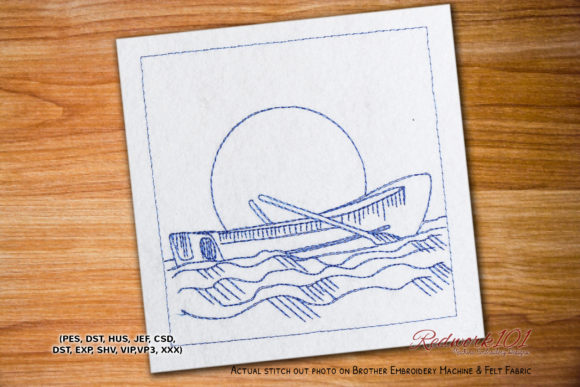
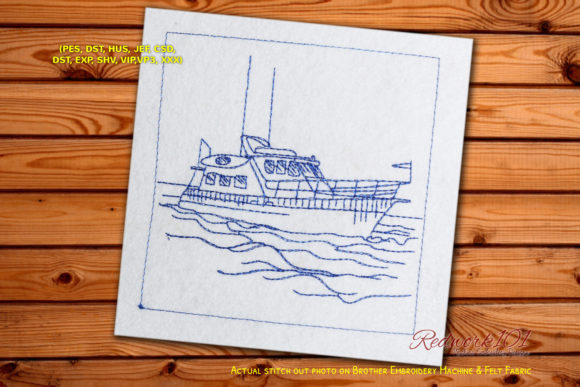
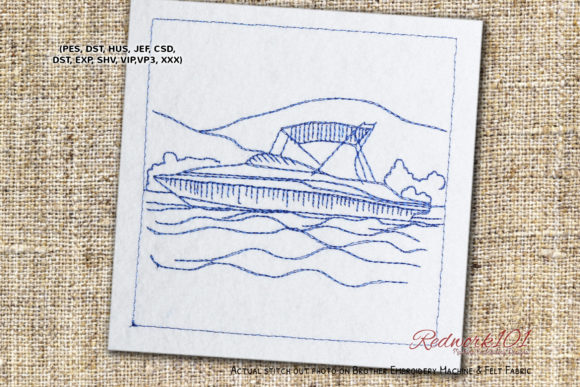
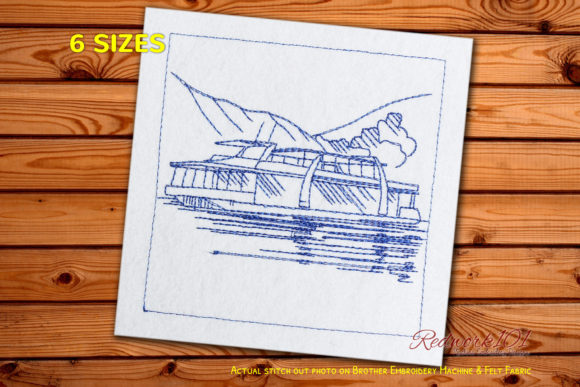
Houseboat Redwork lands in that sweet spot between rustic charm and modern minimalism. The redwork style gives it a soft, farmhouse-stitch feel, but the houseboat subject keeps it fresh and playful. It is not overly cute, not overly elegant, and not trying to be funny. It is simply a warm, inviting image that makes people stop and look. The first thing I noticed was how the open lines and balanced spacing give the design breathing room. That matters when you are selling at a craft fair, because customers do not study files. They glance at a finished product, and Houseboat Redwork telegraphs "handmade quality" in under two seconds.
The optional Box Stitch frame is a smart detail. The product description notes that the outer box color differs in most versions unless it is part of the design itself, and you can skip that color directly in your software. That flexibility is gold for a small shop product. I would recommend testing the design both with and without that box to see which version photographs better for your Etsy listings and which catches the eye faster on a crowded table.
How Houseboat Redwork Performs on Real Products
This is where the review gets practical. I have mentally placed Houseboat Redwork on every item in my typical craft fair booth, and here is what I found.
Tote Bags and Market Bags
This is the natural home for this design. The houseboat shape fills a standard tote bag panel beautifully without crowding the edges. The redwork stitch style reads clearly on cotton canvas and mid-weight natural blends. I would position this as a mid-priced item, around twenty to twenty-five dollars at a fair, and it would move well. The design feels complete at a glance, which is exactly what you need for a tote bag design that has to sell itself while a customer walks past.
Apron Embroidery
On a cross-back apron or a half-apron, Houseboat Redwork sits nicely on the chest or hip panel. The horizontal orientation of the houseboat works well with the apron shape. I would use a medium hoop size and center the design slightly above the pocket. This is a strong product for Mother's Day markets or lake-town craft fairs.
Tea Towel Embroidery
Tea towels are my personal litmus test for any design. If a machine embroidery design looks good on a tea towel, it will look good on almost anything. Houseboat Redwork passes this test. The redwork style matches the classic kitchen towel aesthetic, and the houseboat theme adds a conversational touch. Customers will ask about it, and that is the first step to a sale. I would stitch this onto a natural linen or cotton towel with a soft hem, and price it at twelve to fifteen dollars.
Embroidered Patches
Houseboat Redwork makes a strong patch. The outline is clean enough to trim neatly, and the redwork interior gives it a handmade feel that iron-on patches from big box stores cannot replicate. I would offer these as a standalone item at five to eight dollars, and also sew a few onto caps and pouches as a value-add. Patches are a great way to test a design before committing to larger runs.
Caps and Hats
This is where you need to be careful. The curved surface of a cap can distort designs that are not built for it. The houseboat shape is wide, so you will want to reduce the size slightly and test it on a cap form before you produce a batch. If the box stitch is included, it may push the design too wide for a cap front. I would skip the outer box for caps and let the houseboat sit alone. The redwork stitch density is light enough to avoid puckering on structured cap fabric.
Small Pouches and Pillow Covers
For zipper pouches, cosmetic bags, and throw pillow covers, Houseboat Redwork works as a centered focal design. On a small pouch, it reads as a special detail that justifies a higher price point. On a pillow cover, it becomes a conversation piece. I would use a cream or light gray fabric base to let the redwork pop, and keep the size proportional so the design does not overwhelm the item.
Handmade Gifts and Booth Samples
Having a few finished samples on your table is non-negotiable. Houseboat Redwork stitches up quickly, so you can produce a sample tote and a sample towel without burning through your pre-show prep time. I also recommend printing a few printable mockups of the design on different products for your booth display, especially if you are an Etsy seller who also does in-person events. A mockup of the design on a tote bag, a towel, and a patch helps customers visualize the finished product.
Practical Selling Points for Craft Fair Success
Designs that sell well at craft fairs share a few traits, and Houseboat Redwork hits most of them.
First, the design is easy to understand at a glance. A customer walking past your booth does not need to stop and decode what they are seeing. They see a houseboat, they feel the lakeside or river lifestyle, and they connect emotionally. That instant recognition is the difference between a browse and a purchase.
Second, the design works both as a small accent and as a large focal piece. You can size it down for a cap or a patch, and size it up for a tote bag or a pillow cover. That versatility means you can produce multiple product types from a single embroidery file, which is efficient for batch production and keeps your inventory cohesive.
Third, the redwork style photographs well. For your Etsy listings and social media, redwork on a light background reads clearly even in thumbnail size. That is a huge advantage when you are competing for clicks online. The line art style also holds up well in different lighting conditions, so your booth photos will look consistent whether you shoot indoors or outdoors.
Fourth, the design feels repeatable for batch production. The stitch density is moderate, the thread colors are limited, and the shape is straightforward to hoop. You can stitch ten towels in a row without constant adjustments, which is exactly what you need when you are building inventory for a weekend market.
Careful-Use Notes: What to Watch Before You Stitch
No review is complete without honest warnings. Here is what I check before I commit any design to production.
Stitch density and tiny details. Houseboat Redwork uses open redwork lines, which are generally forgiving. But if the design includes very fine details in the houseboat structure, those could lose clarity on textured fabric like linen or thick towels. I recommend testing on a scrap of your actual fabric before you stitch a full batch. If the lines start to blur, increase the stabilizer weight or reduce the design size slightly.
Small lettering. I do not see explicit lettering in the product description, but if the design includes any small text or numbers, test those at your intended size. Small lettering on caps or thick fabric can become unreadable. If you are sizing the design down for a patch, check that every line stays distinct.
Thick fabric and textured towels. On thick canvas or textured tea towels, redwork lines can sink into the fabric and lose their crispness. Use a medium-weight cutaway stabilizer and a sharp needle. If the fabric is very thick, consider a slight underlay to keep the stitches on top of the fabric.
Curved cap surfaces. As mentioned earlier, the houseboat shape is wide. On a cap, the design may need to be reduced to fit the curved front panel. Test this before you produce a batch of caps. The box stitch, if included, will add width that may not fit well on a cap.
Dark fabric. Redwork is traditionally stitched with red thread on a light background. If you stitch this design on dark fabric, the red may not contrast enough. Consider using a lighter thread color or a white or cream fabric base. The design will lose its signature look if the contrast is weak.
Clarity at smaller sizes. If you plan to sell embroidered patches or small pouches, test the design at reduced size. The houseboat shape should hold up, but the internal details may become muddy. I recommend testing at three sizes and choosing the smallest size that still reads clearly.
Visual Appeal and Customer Engagement
Houseboat Redwork has a quiet confidence that draws customers in. It is not loud or trendy, so it will not feel dated next season. That is important for building a consistent brand as an Etsy seller or small shop product creator. When customers see your booth and recognize the same design style across multiple items, they trust your quality. This design can become a signature piece if you apply it consistently across tote bags, towels, aprons, and patches.
The redwork style also taps into the handmade aesthetic that craft fair shoppers specifically seek. They are not looking for mass-produced perfection. They want the visible stitch quality, the slight texture of the thread, and the story behind the design. Houseboat Redwork delivers that narrative. It suggests weekends on the water, slow mornings, and a relaxed lifestyle. That emotional connection is what turns a casual browser into a buyer.
For your booth display, I recommend grouping all Houseboat Redwork items together on a small shelf or a dedicated section of your table. The visual repetition of the same design on different products creates a cohesive look that feels curated. Customers will pick up the towel, then notice the tote bag, then ask about the patch. That cross-selling dynamic is exactly what you want at a craft fair.
Practical Embroidery Designer Notes
Before you stitch your first sale item, here is my checklist.
Test the design on scrap fabric. Always. Use the exact fabric you intend to sell on. Stitch the design at full size and at the reduced size you plan for patches or caps. Check the stitch quality, the thread tension, and the fabric stability.
Check thread contrast. Red thread on white or cream fabric is classic, but also test on light gray, natural linen, and pale blue. The houseboat theme works well with water-adjacent colors like soft teal or sand. Just make sure the contrast is strong enough to read from a few feet away.
Review spacing and hoop size. Confirm that the design fits within your hoop at the size you intend. The product description does not specify exact dimensions, so measure the design in your software and match it to your hoop. If the design is too large for your hoop, you may need to resize it or use a larger hoop.
Inspect stitch density. Redwork should have open, airy lines. If the density is too high, the fabric may pucker or the thread may bunch. If the density is too low, the design may look sparse. Adjust in your software if needed.
Use the right stabilizer. For most redwork designs on light to medium fabric, a medium-weight cutaway stabilizer works well. For towels or thick fabric, use a heavier stabilizer or add a layer of topper. Test a few combinations before you commit to a batch.
Create at least one real mockup. Do not rely on digital previews alone. Stitch the design on a real tote bag or towel and photograph it in natural light. Use that photo for your Etsy listing, your social media, and your booth display. A real mockup builds trust with online buyers.
Compare fabric colors. If you are producing multiple items, decide on a consistent fabric palette. Houseboat Redwork will look different on cream, natural, light gray, and soft blue. Choose one or two colors that match your brand and stick with them for batch production.
Confirm commercial licensing. Before you sell any finished product, check the license that came with your digital embroidery file. Make sure you have the right to sell physical items made from this design. This is a step that many new crafters skip, and it can cause problems later. The product description does not specify license terms, so verify with your source before you start production.
Final Thoughts on Houseboat Redwork for Craft Fair Sellers
Houseboat Redwork is a solid, versatile, and customer-friendly design that deserves a spot in your craft fair lineup. It performs well on tote bags, tea towels, aprons, and patches. It photographs cleanly for online listings. It stitches reliably in batch production. And it connects with customers on an emotional level that drives sales.
The few caution points, fabric texture, cap curvature, and small-size clarity, are manageable with proper testing. This is not a design that will surprise you with hidden problems. It is straightforward, beautiful, and built for the handmade market.
If you are preparing for your next craft fair, I would recommend stitching a sample tote and a sample towel with Houseboat Redwork, photographing them for your Etsy shop, and building a small collection of items around the design. Let the houseboat anchor your booth, and watch how often customers pick it up, smile, and start a conversation. That is the sign of a design that will sell.