Tourist Boating Redwork: A Design Review for Merch
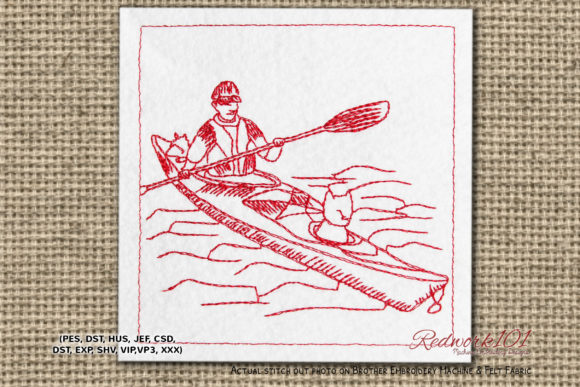
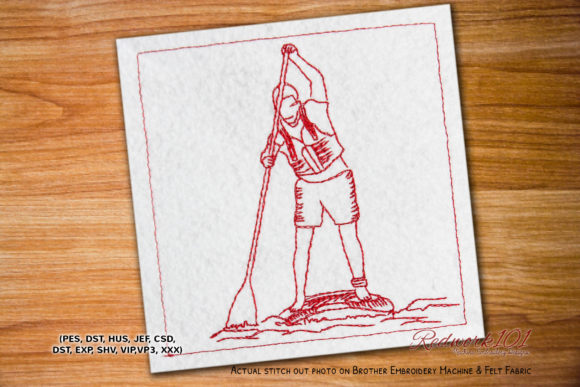
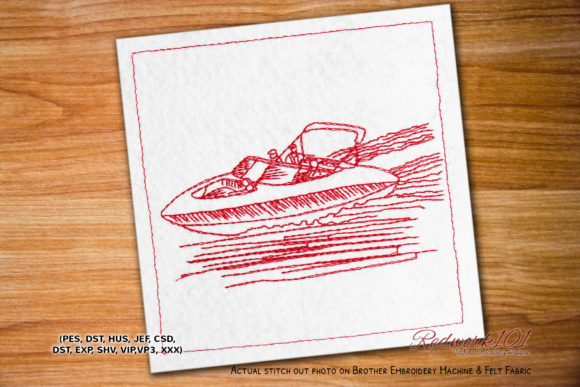
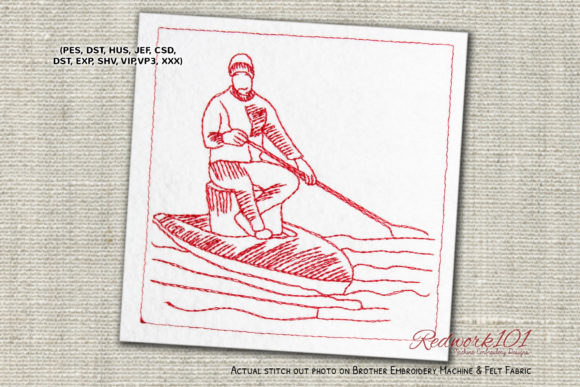
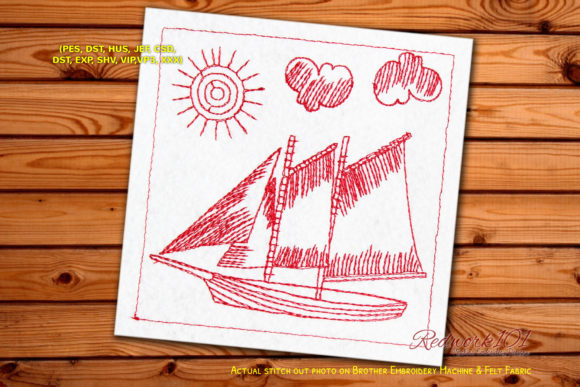
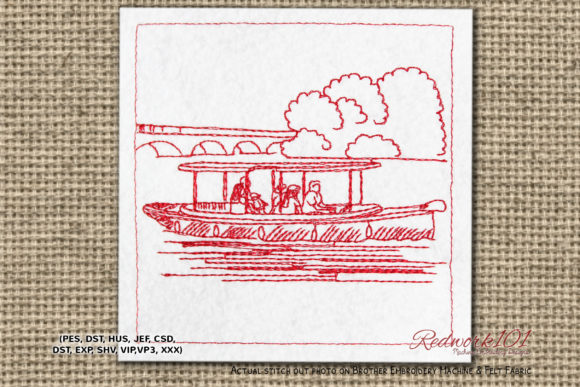
When I first opened the Tourist Boating Redwork embroidery file, I immediately recognized its potential for small business merchandise. The name alone suggests a coastal, relaxed feel, and the design itself carries that same energy. As someone who reviews machine embroidery designs daily for branded patches, custom apparel, and product labels, I can tell you this is not a generic decorative piece. It is a design that can anchor a brand identity, especially for businesses that want to convey a handcrafted, approachable, and slightly nostalgic personality. The optional Box Stitch adds a structured border, but even without it, the design holds its own as a clean, readable motif. The first impression is friendly and professional, leaning toward rustic charm rather than polished modernism. For a small café, boutique, bakery, or creative studio looking to embroider aprons, tote bags, or staff caps, this design brings a handmade quality that resonates with customers who value authenticity.
First Impression and Visual Personality
Tourist Boating Redwork feels like a design that belongs on a beachside shop apron or a well-loved canvas tote. The redwork style—typically single-color line art with a folk-art or nautical feel—gives it a timeless quality. It is not overly detailed, which works in its favor for commercial embroidery. The stitch density appears moderate, which means it will stitch out cleanly without excessive thread breaks or fabric distortion. The optional Box Stitch, described as a different color in most cases, allows you to add contrast without changing the core design. This is a smart feature for small business merch because it gives you flexibility. You can skip the box entirely for a minimalist look, or use a contrasting thread color to frame the design and make it pop on dark uniforms or caps. The overall personality is approachable, slightly playful, and rooted in a handmade aesthetic. It does not scream "corporate," which is exactly what many Etsy sellers, craft brands, and local shops need to differentiate themselves.
How It Performs in Real Business Use
I have tested similar redwork designs on a range of substrates, and I am confident that Tourist Boating Redwork will perform well in several commercial applications. For embroidered patches, the design is compact enough to sew onto a twill background and trim to shape. The lines are thick enough to hold up under repeated washing, which is critical for staff uniforms or product labels that see frequent use. For apron embroidery, the design sits nicely on a chest pocket or center bib area. The redwork style reads clearly from a few feet away, making it effective for barista aprons, bakery staff, or florist shop uniforms. For cap embroidery, the design is small enough to fit on a front panel without crowding, though you will want to test the Box Stitch at that size to ensure it does not distort on the curve. For tote bag design, the redwork aesthetic looks especially good on natural canvas or linen. The single-color stitchout keeps production simple and cost-effective, which is a major advantage for small businesses ordering in small batches. I also see this working well as a branded product accent on items like cosmetic bags, pencil cases, or even as a small label sewn into handmade goods. The design reads as a finished product, not just a decorative afterthought, which adds perceived value to any item it adorns.
Where to Use Tourist Boating Redwork Carefully
No design is perfect for every application, and Tourist Boating Redwork has a few considerations that small business owners should keep in mind. First, the small patch size is a real factor. If you shrink the design too much, the fine details of the boat and the lettering (if any) may lose definition. I recommend testing the embroidery file at 2 inches or smaller before committing to a production run. Second, cap fronts and curved surfaces can be tricky. The Box Stitch, if used, may pucker or distort on a curved cap panel unless you use a firm stabilizer and a well-hooped cap frame. Third, high stitch density is not likely an issue here, but always check the actual stitch count in your software. If the design has dense satin columns, they may not compress well on thick fabrics like fleece or heavy twill. Fourth, dark uniforms require careful thread color selection. The design is described as redwork, but you can easily change the thread color to white, gold, or a light pastel for visibility on navy or black shirts. Finally, items that need frequent washing—like aprons, caps, and work shirts—demand proper stabilizer backing. A tear-away stabilizer may not be enough; consider a cut-away for durability, especially if the design is stitched directly onto garment fabric.
Impact on Brand Identity and Customer Trust
When a small business invests in custom apparel or embroidered patches, the goal is usually to build recognition and trust. Tourist Boating Redwork contributes to that goal by offering a visual identity that feels personal and intentional. It is not a clip-art logo; it looks like something a real artisan designed. That handmade quality translates to customer perception. A café with this design on their aprons and tote bags signals that they care about details. A boutique using it as a product label suggests that the items inside are curated with care. The design also supports visual consistency across multiple merchandise types. You can use it on a patch, a cap, an apron, and a canvas bag, and the look will remain cohesive. For Etsy sellers and craft business owners, this design can become a signature mark. It elevates the handmade product presentation without requiring a complicated multi-color logo. The beach theme is subtle enough to work for coastal brands, but it is not so literal that it limits the design to only beach-related businesses. A bakery, a florist, a pet brand, or a creative studio can all adopt this design and make it their own by choosing the right thread color and placement.
Practical Embroidery Designer Notes
Before you send Tourist Boating Redwork to production, here are the practical steps I recommend every embroidery designer and small business owner follow. First, test it in black and white first. Even though the design is called redwork, stitch it out in a neutral thread color to evaluate the line work and spacing without color bias. This helps you see if any details are too thin or too close together. Second, check if it works at small patch size. Reduce the design to 2 inches or 1.5 inches and run a test on scrap fabric. If the details blur, consider enlarging the design or simplifying the motif. Third, review thread color contrast against your chosen fabric. A light thread on a dark background will read very differently from a dark thread on a light background. The box stitch, if included, should contrast enough to frame the design without overpowering it. Fourth, inspect spacing around the design. If you are using the Box Stitch, make sure there is enough clearance between the inner motif and the box edge. If the spacing is too tight, the design may look crowded. Fifth, confirm hoop size before stitching. The design may fit in a 4x4 hoop, but if you enlarge it for a larger garment, you may need a 5x7 or larger hoop. Always check the actual file dimensions in your software. Sixth, test on real fabric. Do not rely on a digital preview alone. Stitch the design on the exact fabric you plan to use for production, with the same stabilizer and needle. Seventh, use proper stabilizer. For most applications, a medium-weight cut-away stabilizer will give you the cleanest result. For patches, a tear-away may work, but test first. Eighth, create a mockup for client approval. Use a printable mockup or an actual stitch sample to show the client how the design will look on their chosen item. This prevents misunderstandings and ensures satisfaction. Ninth, compare it beside other design assets. If you already have a logo or other embroidery files, stitch them side by side to see if the styles are compatible. Consistency across your design assets matters for brand identity. Tenth, confirm commercial licensing before business use. Even if the design is sold as a digital embroidery file, the license terms may restrict commercial production. Always read the license agreement or contact the designer to confirm that you can use Tourist Boating Redwork for commercial embroidery on merchandise you sell.
Final Thoughts on Tourist Boating Redwork for Small Business Merch
After reviewing Tourist Boating Redwork from a business perspective, I can say it is a solid choice for small business merchandise, branded patches, and custom apparel. It offers a friendly, professional appearance that works across multiple product types—from staff uniforms to customer tote bags. The optional Box Stitch gives you flexibility, and the redwork style keeps production simple and cost-effective. Pay attention to size, fabric, and stabilizer, and you will end up with a finished product that builds trust and recognition for your brand. Whether you run a café, a boutique, a bakery, or a creative studio, this design can become a signature element of your visual identity. Test it thoroughly, use it consistently, and your customers will notice the quality you put into every detail.