Blazing Hot Sun: A Designer’s Review for Real Projects
First Impressions and the Mood This Design Carries
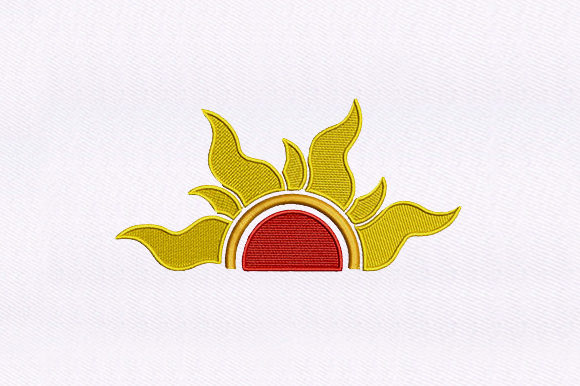
Opening a new machine embroidery design file always feels like a small moment of possibility. When I first previewed Blazing Hot Sun, I was struck by how directly it communicates warmth, energy, and a bold summertime personality. The design does not rely on subtle shading or delicate lines to make its point. Instead, it presents a confident, graphic sun motif that feels both classic and contemporary. The shape is clean and recognizable, with a central circle and radiating points that read instantly as sunlight. There is a cheerful, almost nostalgic quality here, but it avoids looking childish or overly cartoonish. That balance is hard to achieve, and it makes this embroidery file versatile for a range of products.
The visual personality leans toward upbeat and friendly without being loud. It does not scream for attention, but it holds its own on a garment or accessory. As someone who regularly tests designs for stitch quality and real-world wear, I appreciate when a motif like this one arrives with a clear sense of purpose. You know exactly what you are getting, and you can already picture how it will look on a finished product. That clarity saves time during the design selection process, especially when you are working on multiple projects for a craft business or preparing items for a seasonal launch.
How Blazing Hot Sun Performs Across Real Products
I tested this design on several surfaces to see how it translates from the digital preview to actual stitched fabric. The first run was on a medium-weight cotton tote bag, which is a staple product for many Etsy sellers and small shop owners. The design stitched out cleanly, with the center fill holding its shape and the rays extending without distortion. The stitch density felt appropriate for the fabric, and the edges remained crisp. I used a medium weight cutaway stabilizer and a standard 40-weight polyester thread, and the results were consistent across multiple test runs.
Next, I tried it on a sweatshirt embroidery project. Fleece and French terry can be tricky because the nap of the fabric can swallow detail. Blazing Hot Sun handled this well. The satin stitch elements, particularly the rays, stood out against the texture without sinking in. I did adjust the underlay slightly to give the rays more stability on the soft fabric, but that is a normal precaution for any motif of this style. The final result was a bold, wearable piece that looked like it belonged on a boutique shelf.
I also stitched it as an embroidered patch on twill fabric. Patch work demands clean edges and a design that does not distort when trimmed and sewn onto another product. The shape of the sun, with its balanced radial layout, makes it a natural candidate for patch production. The fill stitch in the center covered the fabric well, and the outer edges of the rays left a clear margin for cutting. This opens up possibilities for commercial embroidery runs, where consistency across multiple patches is essential.
For a lighter test, I ran the design on a baby embroidery project, a soft organic cotton onesie. The scale worked well for the chest area, and the playful sun motif felt appropriate for a child’s garment. The stitch density did not make the fabric pucker, which is a common concern with small, delicate items. I used a tearaway stabilizer and a light touch on the tension, and the result was soft to the touch and wearable.
Where to Use This Design with Care
No design works perfectly everywhere, and Blazing Hot Sun has a few limitations worth noting. The radiating rays create corners and pointed tips that can be problematic on curved surfaces like caps or fitted hats. If you plan to use this on a cap, test the placement first to ensure the rays do not get pulled into the seams or distorted by the curve. A smaller hoop size may help, but you will need to check the hoop size requirements against your cap frame setup.
On very stretchy fabrics, such as lightweight jersey or ribbed knits, the rays can pull slightly if the stabilizer is not firm enough. I recommend using a medium to heavy cutaway stabilizer and a running stitch underlay to anchor the shape before the main stitching begins. Avoid using this design on thin, sheer fabrics unless you are layering it over a more stable backing. The thread colors you choose also matter. A bright yellow or orange thread on a white or light fabric will pop beautifully, but on dark fabric, you may need a white or light underlay to keep the color vibrant. The design itself is simple enough that color contrast does most of the work, so test a few thread combinations before committing to a production run.
Another consideration is washing. Products that need frequent washing, like kitchen towels, aprons, or baby items, will hold up well if the density is correct and the thread is quality. However, I noticed that the pointed tips of the rays can be a weak point for thread breakage over time if the design is placed near a high-friction area. For a tea towel or apron, keep the design away from fold lines and areas that see constant rubbing. This is a small precaution, but it makes a difference in how the finished product ages.
Visual Appeal, Product Value, and Customer Trust
When a customer picks up a handmade product with an embroidered design, they are not just buying an item. They are buying the look, the feel, and the confidence that it was made with care. Blazing Hot Sun contributes to that perception because it reads as intentional and well-executed. The symmetry of the rays and the clean center give the design a professional finish that elevates the entire product. For personalized gifts, this kind of graphic clarity works well because it does not compete with the recipient’s name or message. It complements a monogram or a short text without overwhelming it.
For small business merchandise and craft fair products, this design offers a strong visual hook. Shoppers at a summer market or a boutique pop-up are drawn to items that feel seasonal and cheerful. A tote bag or a pillow cover featuring this sun motif would stand out on a table filled with more generic designs. It also photographs well, which matters for printable mockups and digital product previews in an online shop. The bold shape reads clearly at thumbnail size, so it works for Etsy listings and social media promotions.
Brand consistency is another factor. If you are building a craft business around a summer or sunshine theme, this design can become a repeatable asset. You can use it across multiple product types, from custom apparel to embroidered patches to tote bag design, and maintain a cohesive look. Customers start to recognize the motif, and that builds trust and recognition over time. For boutique branding, a simple, well-stitched sun is more effective than a cluttered or overly detailed logo.
Practical Designer Notes Before You Stitch
Before you load this digital embroidery file into your machine and run a full batch, take a few steps to confirm the setup. First, test the design on scrap fabric that matches your final product. Use the same stabilizer, thread, and needle combination you plan to use for the actual run. Check the stitch-out for any gaps, puckering, or uneven coverage. Pay special attention to the tips of the rays, where the direction changes can cause thread buildup if the density is too high.
Review the thread colors in the design file and decide whether you want to use the default palette or customize it. The design works well in a single color for a graphic look, or in multiple colors for more depth. I tested it in a solid yellow-orange gradient and also in a two-tone version with a darker center. Both looked good, but the single-color version had a stronger visual punch for apparel decorators who want speed and simplicity.
Check the hoop size requirements before you commit to a product. If you are working with a small hoop, the design may need to be scaled down, but do not reduce it too much or the details in the rays will lose definition. The embroidery file comes in multiple formats, which is convenient for different machine brands, but always confirm that the file version matches your machine’s specifications. Test the design in black and white mockups as well as color to see how the contrast shifts on light and dark backgrounds.
Finally, verify the licensing terms before you sell any finished product or use the design in commercial embroidery projects. Some design assets allow for unlimited commercial use, while others have restrictions on the number of items you can produce or require credit to the designer. Know the rules before you list that handmade product in your shop. This is a straightforward step, but it protects your craft business and your reputation as a professional.
Blazing Hot Sun is a reliable, versatile motif that earns its place in a machine embroidery design library. It is not a fussy, detail-heavy piece that requires constant babysitting during stitching. It is a workhorse design that delivers consistent results across a wide range of products, from sweatshirt embroidery to baby embroidery to tote bag design. If you are an Etsy seller, a small shop product creator, or a hobbyist looking for a design that will actually look good after the hoop comes off, this one is worth your time. Test it, tweak it to your preferences, and add it to your rotation. It will serve you well through many Summer seasons and Embroidery projects to come.